
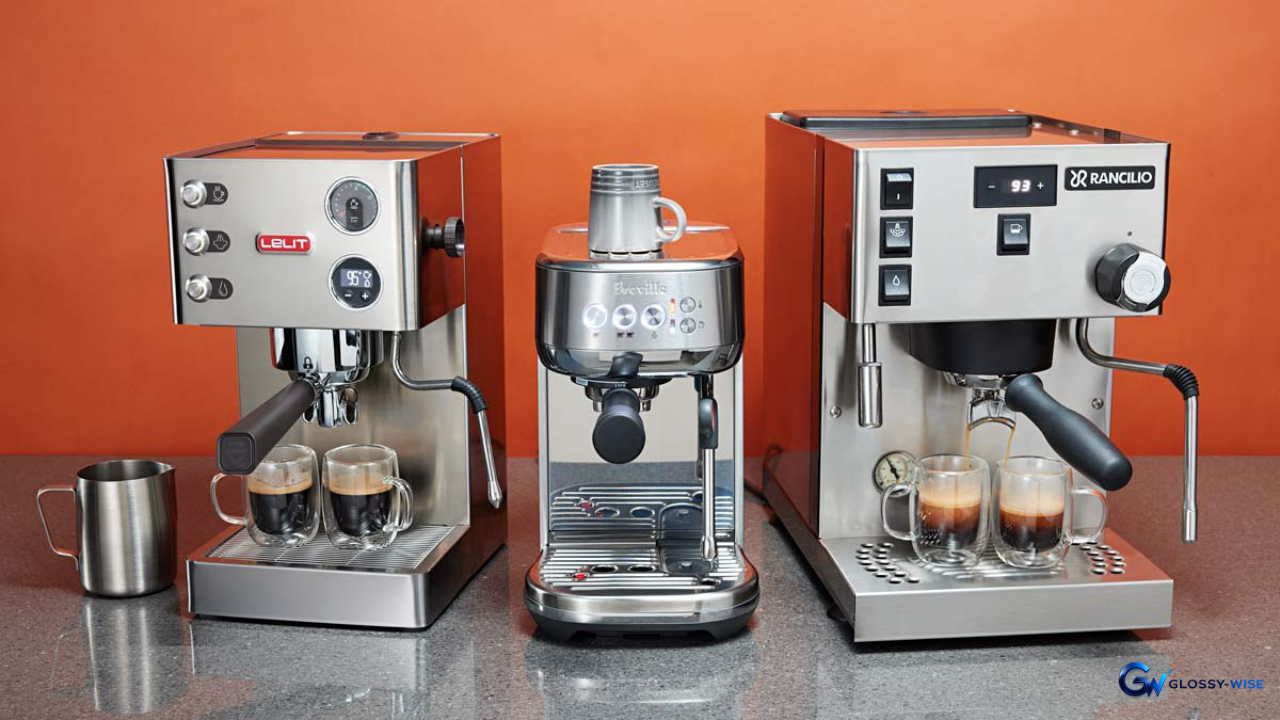
Best Espresso Machine Under $500: A Practical Guide to Choosing the Right One
Finding the best espresso machine under 500 dollars is easier than it sounds, but choosing the right model requires more than comparing prices. At this budget, you can find compact machines that produce impressive espresso, models with automatic milk steaming, and traditional machines designed for people who want to develop real barista skills.
For many home users, the Breville Bambino Plus is one of the strongest options in this price range. Current 2026 buying guides commonly place it near the $500 ceiling, while the standard Breville Bambino offers a lower-cost alternative for buyers who prefer to spend more of their budget on a quality grinder.
However, there is no single machine that is perfect for everyone. Your ideal choice depends on how much control you want, whether you drink milk-based beverages, how much counter space you have, and whether you already own a suitable espresso grinder.
What Can You Expect From an Espresso Machine Under $500?
A $500 budget puts you in an interesting part of the home espresso market. You are generally beyond basic entry-level machines while still below the price of many prosumer machines.
At this level, you can expect features such as:
- Fast heating systems on some models
- Manual or automatic milk steaming
- Better temperature management
- More capable portafilters and baskets
- Compact countertop designs
- Programmable or volumetric shot controls
- Better build quality than many inexpensive machines
- Greater control over espresso preparation
One important point is that the machine is only part of the equation. Most semi-automatic machines in this category do not include a grinder, so you may need to purchase one separately. Several current buying guides emphasize that a good burr grinder can make a substantial difference to the quality and consistency of the espresso you produce.
That means spending the entire $500 on the machine may not always produce the best overall setup.
Breville Bambino Plus: A Strong Overall Choice
If you want an easy recommendation, the Breville Bambino Plus deserves serious consideration. It combines a compact design with fast heating, espresso controls and automatic milk texturing.
Current 2026 listings place the machine around $499.95, although prices can change depending on the retailer and promotions.
The machine uses Breville’s ThermoJet heating system, which is advertised to reach brewing temperature in approximately three seconds. It also provides automatic milk texturing, allowing users to select milk temperature and texture rather than having to master steaming entirely by hand.
This makes it particularly appealing to people who enjoy cappuccinos, lattes and flat whites but do not want to spend weeks learning milk-steaming technique.
Another advantage is its relatively small footprint. A compact machine can be especially useful in apartments, smaller kitchens or coffee stations where every inch of counter space matters.
Breville Bambino vs. Bambino Plus
The standard Bambino is worth considering if the Bambino Plus stretches your budget too far.
The regular Bambino is typically listed around $299.95 and uses a 54 mm portafilter with a manual steam wand. The Bambino Plus adds automatic milk texturing and is positioned closer to the $500 mark.
The choice comes down largely to how you prepare coffee.
Choose the standard Bambino if:
- You primarily drink straight espresso
- You are comfortable learning to steam milk manually
- You want to save money for a grinder
- You prefer hands-on control
- You want a compact machine at a lower price
Choose the Bambino Plus if:
- You frequently make lattes or cappuccinos
- You want automatic milk texturing
- Convenience is important
- You want a machine that is beginner-friendly
- You can spend close to the full $500 budget
For someone searching for the best espresso machine under 500, the Bambino Plus is particularly attractive when milk-based drinks are a major part of the daily routine.
Gaggia Classic: Better for Hands-On Espresso Enthusiasts
Another type of buyer may prefer a traditional Gaggia machine rather than an automation-focused model.
The Gaggia Classic family has long appealed to people who want a more traditional espresso workflow. Models in this category use a larger 58 mm portafilter, which can be attractive to enthusiasts interested in accessories, baskets and experimentation. Current 2026 buying guides place some Gaggia Classic variants around the upper end of this budget, although exact pricing varies by model and market.
The major difference is philosophy.
A machine such as the Bambino Plus tries to make the process easier. A traditional Gaggia encourages you to participate more directly in it.
You grind the beans, distribute the coffee, tamp the puck, control extraction and steam your milk manually. That can require more practice, but it can also make the process much more rewarding for someone who enjoys learning.
If your goal is to become more confident with espresso preparation rather than simply pressing a button, this type of machine may be worth considering.
De’Longhi Machines for Smaller Budgets
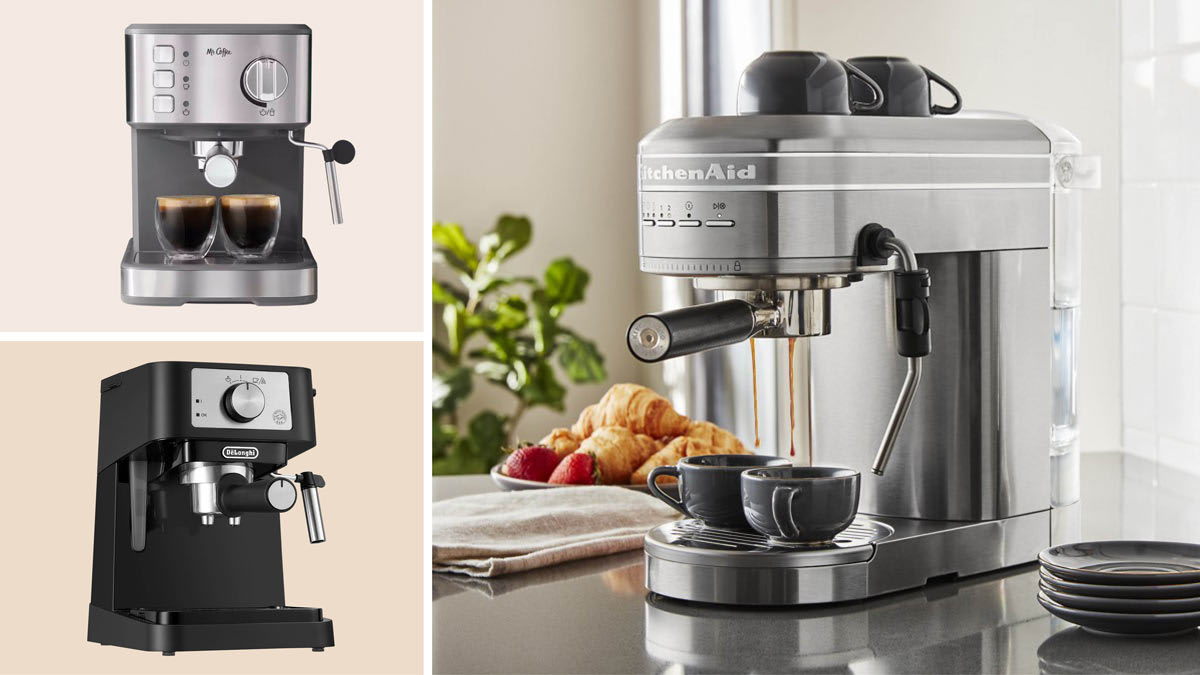
De’Longhi offers several machines that can leave significant room in a $500 budget.
The Dedica family is particularly interesting for people with limited counter space. Current buying guides list Dedica models well below $500, making them an option for shoppers who want a compact semi-automatic setup without spending their entire budget on the machine.
There are also less expensive De’Longhi models for buyers who are simply entering the world of home espresso.
The advantage of choosing a less expensive machine is that you can allocate the remaining money toward:
- A better burr grinder
- Fresh espresso beans
- A quality tamper
- A precision scale
- A better milk pitcher
- Water filtration and maintenance supplies
This can sometimes create a better overall coffee station than spending $500 on the espresso machine alone.
Why the Grinder Matters So Much
One of the biggest considerations when choosing the best espresso machine under 500 is something that is not actually inside the machine: the grinder.
Espresso requires a relatively precise grind. If the grind is too coarse, water may pass through the coffee too quickly. If it is too fine, extraction can become excessively slow.
A capable burr grinder allows you to make small adjustments and respond to changes in the beans, dose and brewing conditions.
This is why a $300 espresso machine paired with a capable grinder can be a smarter setup than a $500 machine paired with an inexpensive grinder.
For many buyers, a sensible budget might look like this:
$300 machine + $150 grinder + $50 accessories
rather than:
$500 machine + low-quality grinder
The exact numbers are flexible, but the principle is important: espresso quality depends on the entire preparation system.
What Features Should You Look For?
When comparing the best espresso machine under 500, avoid focusing only on advertised pump pressure or the number of buttons.
Instead, consider how the machine fits your actual coffee routine.
Heating System
Fast heating is convenient if you make coffee in the morning and do not want to wait several minutes. ThermoJet and thermoblock-style systems can be particularly attractive for quick preparation.
Temperature Control
Stable brewing temperature can help produce more consistent results. Some machines offer more sophisticated temperature management than others.
Portafilter Size
Portafilter size affects compatibility with baskets and accessories. A 58 mm setup is common in traditional commercial-style equipment, while machines such as the Bambino use a smaller 54 mm format.
Milk System
If you mainly drink espresso, a manual steam wand may be perfectly adequate.
If you regularly make lattes, automatic milk texturing can save time and make the learning curve easier.
Water Tank
A larger removable tank means fewer refills, particularly useful if several people in the household drink espresso throughout the day.
Counter Space
Measure the space where you plan to place the machine. A technically excellent espresso maker is not convenient if it dominates your kitchen.
Should You Buy a Machine With a Built-In Grinder?
Some machines around this budget combine grinding and espresso preparation in one appliance.
This can be attractive because it simplifies the setup. You do not need to find space for two separate machines, and the workflow can be easier for beginners.
The trade-off is flexibility.
With separate equipment, you can upgrade your grinder without replacing the espresso machine. You can also select a grinder specifically for espresso rather than accepting the grinder integrated into the machine.
For someone who values convenience, an all-in-one machine can make sense. For someone who wants to improve their espresso skills over time, separate equipment may provide greater flexibility.
How to Choose Based on Your Coffee Habits
The easiest way to identify the best espresso machine under 500 is to start with your drinking habits instead of the specifications.
If You Mostly Drink Espresso
Prioritize temperature stability, a good portafilter, reliable extraction and grinder compatibility.
You may not need automatic milk features, so spending less on the machine and more on the grinder could be a better approach.
If You Love Lattes
Look closely at the milk system. The Bambino Plus stands out because its automatic milk texturing reduces the difficulty of producing consistent steamed milk.
If You Want to Learn Barista Skills
A traditional semi-automatic machine with a manual steam wand can be more rewarding.
You will have more opportunities to practice dosing, tamping, extraction and milk steaming.
If You Have a Tiny Kitchen
Look for compact machines such as the Bambino or Dedica series. Their smaller footprints make them easier to fit into limited spaces.
If You Want the Simplest Setup
An integrated grinder or automatic brewing system can reduce the number of separate steps involved in making coffee.
The convenience is valuable for people who want good coffee without turning every morning into a technical exercise.
Accessories That Can Improve Your Setup
Even the best espresso machine under 500 benefits from a few basic accessories.
A good starting setup includes:
- A reliable burr grinder
- Digital coffee scale
- Suitable espresso beans
- Quality tamper
- Milk pitcher if you prepare milk drinks
- Microfiber cleaning cloths
- Espresso machine cleaning supplies
A scale is particularly useful because it lets you measure coffee and beverage output rather than relying entirely on visual judgment.
Fresh beans also matter. Espresso machines cannot compensate completely for stale coffee or inconsistent grinding.
How Much Should You Actually Spend?
There is no requirement to spend the entire $500.
A buyer with a $500 total coffee budget might be better served by purchasing a machine around $250–$350 and putting the remaining money toward a grinder and accessories.
On the other hand, if you already own a good espresso grinder, spending close to $500 on a better machine makes more sense.
Think of your budget as a complete espresso setup rather than a machine-only budget.
That approach makes the comparison much more practical.
Is $500 Enough for Good Espresso at Home?
Yes. A $500 ceiling is enough to enter serious home espresso without moving into expensive prosumer equipment.
The important distinction is that excellent espresso comes from a combination of machine capability, grinder quality, fresh coffee and technique.
You should not expect every machine under $500 to behave like a commercial café machine. However, modern entry-level and mid-range home machines can produce very satisfying espresso when properly dialed in.
Current 2026 guides consistently identify machines such as the Breville Bambino, Bambino Plus and several De’Longhi models as compelling choices in this price category.
A Simple Buying Strategy
If you are still undecided, use this process:
First, decide whether you drink mostly black coffee or milk-based drinks.
Second, decide whether you want automatic convenience or manual control.
Third, reserve part of your budget for a capable grinder if you do not already own one.
Fourth, measure your available counter space.
Finally, compare the total cost of the setup rather than the espresso machine alone.
For many beginners, the Breville Bambino Plus is an appealing all-round option because of its fast heating, compact footprint and automatic milk texturing. For shoppers who want to spend less and learn the craft themselves, the standard Bambino or a traditional Gaggia or De’Longhi model may offer better value depending on their priorities.
Conclusion
The best espresso machine under 500 is not necessarily the machine with the longest feature list or the highest advertised pressure. The right choice is the one that matches your coffee habits, available space, experience level and total equipment budget.
For convenience and milk drinks, the Breville Bambino Plus is one of the strongest options currently available around the $500 limit. Its fast heating and automatic milk texturing make it particularly approachable for beginners.
If you prefer hands-on preparation, a traditional Gaggia-style machine may be more satisfying. If you want to save money for a grinder or have limited counter space, a standard Bambino or compact De’Longhi can make more sense.
Most importantly, remember that the machine is only one part of the espresso equation. A good grinder, fresh beans, accurate dosing and a little practice can have a bigger impact on your daily cup than simply moving from one machine to another.
Frequently Asked Questions
What is the best espresso machine under $500 for beginners?
The Breville Bambino Plus is a strong beginner-friendly choice because it heats quickly and offers automatic milk texturing.
Is the Breville Bambino Plus worth $500?
It can be worthwhile for people who regularly make milk-based drinks and value convenience, especially when the machine is available near the $500 price point.
Can I make café-quality espresso with a machine under $500?
You can make very good home espresso under $500, particularly when the machine is paired with a capable burr grinder and fresh beans.
Do espresso machines under $500 include grinders?
Many semi-automatic models do not include grinders, so you should check the complete package before purchasing.
Is a separate grinder better than a built-in grinder?
A separate grinder generally gives you more flexibility and makes it easier to upgrade the grinding side of your setup later.
Is the Bambino better than a De’Longhi Dedica?
The better choice depends on your priorities, with the Bambino offering a particularly attractive combination of fast heating and compact performance while Dedica models can provide lower-cost alternatives.
What should I spend on a grinder with a $500 espresso budget?
A practical approach is to avoid spending the entire budget on the machine and reserve a meaningful portion for a capable espresso-focused burr grinder.
How long can an espresso machine under $500 last?
Its lifespan depends on construction, usage, water quality, cleaning and maintenance, so regular care is important regardless of the machine’s purchase price.
Also Read: glossy-wise.com